
May 18, 2026
272 Views
Safe riding is not just about controlling your own actions—it’s about anticipating and compensating for the mistakes of others. In this briefing, we discuss how to apply IPSGA dynamically to ensure you stay visible, predictable, and ready to react at all times.
SMIDSY
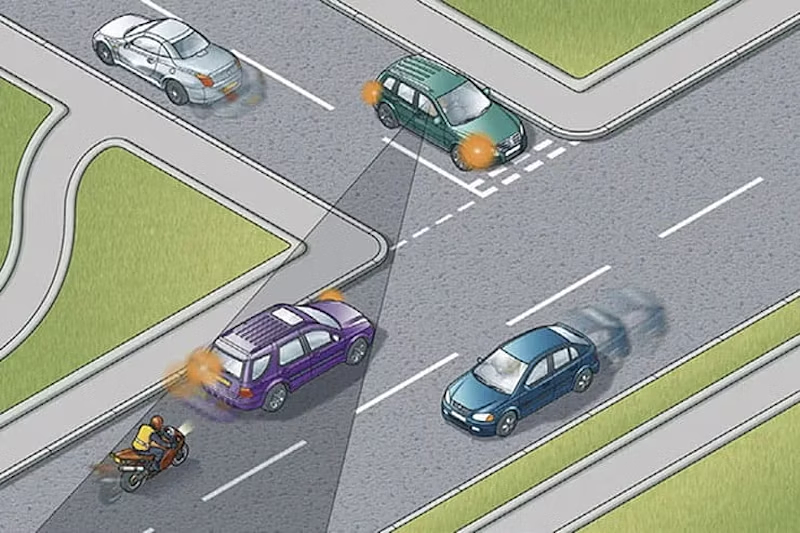
is an acronym for "Sorry Mate, I Didn't See You." It refers to a common traffic collision, typically at junctions or intersections, where a driver pulls out into the path of a smaller, vulnerable road user like a motorcyclist or cyclist, and later offers that exact phrase as an apology.
Why does it happen? The Science of Being Seen
Why does it happen? The Science of Being Seen
- Although motorcycles are not inherently hard to see, their narrow profile does makes them more difficult to see. Often however, they are simply not in a position where they can be seen effectively.
- Drivers may look but fail to perceive motorcycles due to physiological and perceptual limits.
- Psychological factors (e.g., expectation, attention bias) contribute to missed detection.
- Even when seen, drivers often misjudge a motorcycle’s speed and distance.
In summary, The belief that drivers “don’t look properly” is oversimplified and largely inaccurate. The real issue is a combination of visibility, perception, and human cognitive limitations.
Dealing with Other Road Users' Mistakes:
Using IPSGA as the framework, let’s discuss Best Practice and its application to others’ mistakes
Information Phase:
Continuous observation, mirrors, scanning, hazard anticipation | Spot vehicles likely to pull out, misjudge speed, or change lanes suddenly.
Position Phase:
Choose lane position for maximum visibility and escape routes | Avoid blind spots; move out from kerbside when approaching junctions.
Speed Phase:
Adjust speed early and smoothly | Reduce speed when approaching side roads or busy junctions; maintain safe following distance.
Gear Phase:
Select gear appropriate for speed and hazard | Stay in a responsive gear when approaching unpredictable traffic.
Acceleration Phase:
Apply power smoothly to clear hazards | Use controlled acceleration to move away from danger zones after evasive manoeuvres.