
April 18, 2026
352 Views
According to Motorcycle Roadcraft, safer group riding relies on applying the System of Motorcycle Control while maintaining communication, proper spacing, and individual responsibility for speed and positioning. Key considerations include conducting pre-ride briefings, managing fatigue, and ensuring high visibility to prevent "follow-the-leader" risks.
The Group should consider:
• Rider experience level (all)
• Experience level (individual inexperienced riders)
• The group’s pace as a whole causing individuals to ride beyond their limitations.
• “Groupthink” where everyone gets carried away.
Positioning Strategies
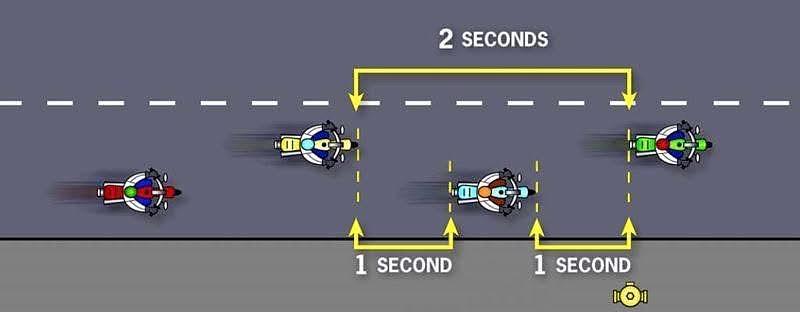
The safest and most common motorcycle group riding position is the staggered formation(zigzag pattern). This creates a large buffer zone, allowing each rider a clear view of the road, safe following distances, and an "escape route" to manoeuvre around hazards.
Staggered Formation:
The formation looks like a checkerboard from above, with riders alternating between the right (position 3) and left thirds (position 1) of a single lane.
• Leader: Positioned in the right- third of the lane.
• Rider 2: Positioned in the left- third, at least 1 second behind the leader.
• Rider 3: Positioned in the right-third, 2 seconds behind the leader (1 second behind Rider 2).
• Subsequent Riders: Continue the pattern.
Key Safety Principles:
• Avoid Side-by-Side: Never ride directly next to another rider, as this eliminates your space to swerve if a hazard appears.
• 2-Second Rule: The leader should maintain a 2-second gap from the rider in front, and 1-second gaps should exist between staggered pairs.
• When to Use Single File: Switch to a single file (with a minimum 2-second gap between all riders) on bends, where the road narrows, during poor visibility, or when entering/leaving motorways.
• Overtakes: Pass one by one, not as a group, to avoid confusion and dangerous lane sharing. Do not blindly follow another rider.
Roles within the Group:
• Lead Rider: Sets the pace, chooses the route, directs markers to mark junctions.
• Sweep (Tail) Rider: Experienced rider at the back, ensures no one is left behind.
• Main pack: individuals should ride their own ride. If the drop-off system is used, there may be gaps where it’s not possible to see the rider ahead. That’s ok- trust the system and approach junctions with care, looking for the marker.
• Overtaking in the group: is allowed. It’s encouraged whenever riders get bunched up because it allows individuals with varying abilities to ride at their own pace, safe in the knowledge that the sweeper will ensure no-one gets left behind. However, overtakes must be done safely and respectfully.
The Group should consider:
• Rider experience level (all)
• Experience level (individual inexperienced riders)
• The group’s pace as a whole causing individuals to ride beyond their limitations.
• “Groupthink” where everyone gets carried away.
Positioning Strategies
The safest and most common motorcycle group riding position is the staggered formation(zigzag pattern). This creates a large buffer zone, allowing each rider a clear view of the road, safe following distances, and an "escape route" to manoeuvre around hazards.
Staggered Formation:
The formation looks like a checkerboard from above, with riders alternating between the right (position 3) and left thirds (position 1) of a single lane.
• Leader: Positioned in the right- third of the lane.
• Rider 2: Positioned in the left- third, at least 1 second behind the leader.
• Rider 3: Positioned in the right-third, 2 seconds behind the leader (1 second behind Rider 2).
• Subsequent Riders: Continue the pattern.
Key Safety Principles:
• Avoid Side-by-Side: Never ride directly next to another rider, as this eliminates your space to swerve if a hazard appears.
• 2-Second Rule: The leader should maintain a 2-second gap from the rider in front, and 1-second gaps should exist between staggered pairs.
• When to Use Single File: Switch to a single file (with a minimum 2-second gap between all riders) on bends, where the road narrows, during poor visibility, or when entering/leaving motorways.
• Overtakes: Pass one by one, not as a group, to avoid confusion and dangerous lane sharing. Do not blindly follow another rider.
Roles within the Group:
• Lead Rider: Sets the pace, chooses the route, directs markers to mark junctions.
• Sweep (Tail) Rider: Experienced rider at the back, ensures no one is left behind.
• Main pack: individuals should ride their own ride. If the drop-off system is used, there may be gaps where it’s not possible to see the rider ahead. That’s ok- trust the system and approach junctions with care, looking for the marker.
• Overtaking in the group: is allowed. It’s encouraged whenever riders get bunched up because it allows individuals with varying abilities to ride at their own pace, safe in the knowledge that the sweeper will ensure no-one gets left behind. However, overtakes must be done safely and respectfully.